Weather & seasons · last checked 25 September 2026
Andaman weather and temperature, month by month: what actually happens
Most guests arrive with one wrong idea — that June and July mean non-stop monsoon rain across the Andaman & Nicobar Islands. What actually happens: air stays 23–32°C all year, the sea holds 27–29°C, and the islands get sudden tropical thunderstorms, not weeks of drizzle — in our experience, only 5–6 genuinely disruptive weather days in a typical May–August season. A storm's real cost is a cancelled ferry and murky snorkelling water, not a ruined trip. This page is the weather picture we give our own guests, with the numbers we plan around.
Deciding when to go? The short answer on the best season to visit Andaman is in our best-time guide.
Port Blair right now
Forecast model updated 6:50 pm IST
26°CPartly cloudy
- Wind
- 5 km/h
- Humidity
- 99% humidity
- Rain in the next six hours
- next 6 h: dry
- Today26–26°CPartly cloudy
- Tue 2024–30°CHeavy rain · 24 mm
- Wed 2124–28°CRain · 32 mm
- Thu 2224–27°CHeavy rain · 17 mm
- Fri 2325–27°CHeavy rain · 37 mm
- Sat 2424–26°CHeavy rain · 26 mm
- Sun 2524–25°CHeavy rain · 27 mm
Forecast data: MET Norway (CC BY 4.0), summarised by us for Port Blair; today's rain is what is still to come. A model, not our own reading — for warnings and the official forecast use the IMD Port Blair centre. The rest of this page is the climate guide: what each month is normally like.
The numbers we plan around
5–6 days
Genuinely disruptive weather days in a typical May–August season — in our experience running trips through it, as of 2026. Not five to six weeks.
23–32°C
The year-round air temperature band across the Andaman & Nicobar Islands; the sea holds 27–29°C. No month is cold — the variables here are rain and sea state, never temperature.
Dec 15 – Jan 15
The usual hotel surcharge window, mainly at popular hotels. December's weather is lovely — November's is close to it, before the surcharge starts.
Andaman temperature by month
The short answer: the Andaman & Nicobar Islands sit between 23°C and 32°C all year, and the sea holds 27–29°C. No month is cold, and no month is genuinely unbearable — April and May are the warmest (up to 32°C), January the coolest at night (down to 23°C). Temperature is almost never the reason to pick one month over another here; rain and sea state are.
| Month | Night low | Day high |
|---|---|---|
| January | 23°C | 29°C |
| February | 24°C | 30°C |
| March | 25°C | 31°C |
| April | 25°C | 32°C |
| May | 25°C | 32°C |
| June | 24°C | 30°C |
| July | 24°C | 30°C |
| August | 24°C | 30°C |
| September | 24°C | 30°C |
| October | 24°C | 30°C |
| November | 25°C | 30°C |
| December | 25°C | 30°C |
Typical ranges, not records — humidity sits high year-round, so 31°C in April feels warmer than the number suggests, and an overcast monsoon afternoon feels cooler. Sea temperature stays 27–29°C in every month, which is why the water never feels cold even in December.
The Andaman climate, month by month — honestly rated
Temperatures barely move all year. What changes is rain, the sea, and what your money buys. The verdicts are ours — the same ones we give on the phone.
One thing peak-season visitors get wrong: December is calm, but it is not the flattest sea of the year — it still carries the tail of the northeast monsoon. The genuinely glass months are February to April, once the crowds have thinned. That is the same argument our verdict column makes about price, arriving from the other direction. The month-by-month wave figures behind this sit on our sister site's Andaman sea conditions data, built from ten years of readings.
Andaman weather in January
23–29°C. Rain very low, about 26 dry days in 30; sea calm; crowds high, with peak prices. Our verdict: excellent — book 60–90 days out.
Andaman weather in February
24–30°C. Rain lowest, about 28 dry days in 30; sea calm; crowds medium. Our verdict: excellent — clearest water.
Andaman weather in March
25–31°C. Rain lowest, about 28 dry days in 30; sea calm; crowds medium. Our verdict: very good, warming up.
Andaman weather in April
25–32°C. Rain very low, about 26 dry days in 30; sea flattest of the year; crowds low–medium. Our verdict: good — hot afternoons, glass sea.
Andaman weather in May
25–32°C. Rain high, about 14 dry days in 30; sea rough spells; crowds low–medium, with budget rates. Our verdict: fine if flexible — see monsoon notes.
Andaman weather in June
24–30°C. Rain very high (thunderstorms), about 10 dry days in 30; sea rough spells; crowds low–medium. Our verdict: doable with buffer days.
Andaman weather in July
24–30°C. Rain very high (thunderstorms), about 10 dry days in 30; sea rough spells; crowds low. Our verdict: doable with buffer days.
Andaman weather in August
24–30°C. Rain very high, about 9 dry days in 30; sea rough spells; crowds low. Our verdict: doable with buffer days.
Andaman weather in September
24–30°C. Rain very high, about 9 dry days in 30; sea improving; crowds low–medium, with good rates. Our verdict: wettest weeks, lowest prices — flexible plans only.
Andaman weather in October
24–30°C. Rain high, easing, about 13 dry days in 30; sea calming; crowds medium. Our verdict: good value — showers still common.
Andaman weather in November
25–30°C. Rain moderate, about 16 dry days in 30; sea calm; crowds high. Our verdict: our pick — near-December weather, before the surcharge.
Andaman weather in December
25–30°C. Rain low, about 21 dry days in 30; sea calm, not the flattest; crowds very high, with surcharges. Our verdict: dry and calm — and priced like it.
Temperatures are typical ranges checked against ten years of readings from the Port Blair airport gauge (NOAA GSOD, 2015–2024); dry days are that gauge's averages, scaled to a 30-day month. Crowd levels follow DGCA arrivals at Port Blair, 2023–2025. This is a climate guide measured at Port Blair, not a forecast — for current conditions, check the India Meteorological Department. Verdicts reflect how we advise our own guests. Peak-season ferry and hotel inventory genuinely sells out — for December–January, book 60–90 days ahead.
Prices depend on your dates and rooms — the month-by-month verdict page compares the seasons, and the trip cost page shows how to compare quotes.
The two rules we give every guest
Arriving
Land in Port Blair and stay the first night. A guest recently missed Havelock entirely because his flight arrived late in bad weather — a same-day flight-to-ferry connection is the most fragile plan in the Andamans. Day one Port Blair, day two Havelock.
Leaving
Keep the final overnight in Port Blair before flying home, as our example routes do. This separates the ferry and flight days. It does not guarantee a connection or provide a full extra buffer day; ask about more time if you need it.
The examples on our day-by-day itineraries page show the first and final overnight locations explicitly.
May to September, without the brochure gloss
The southwest monsoon runs May to September. On the ground that means green islands, empty beaches, budget prices — and a handful of days when the sea says no. Ferries sail on most days, in our experience. Our ferry study counts how often travellers cancel their own bookings, across 28,482 booked legs; it cannot count sailings cancelled by an operator. One thing that surprises people: across 35 years of storm records (1991–2025), no cyclone passed within 300 km of Port Blair from June to September — the wettest months have also been the storm-free ones. The Port Blair rain gauge also records about ten dry days in a typical July; NASA's gridded reanalysis for the same years gives two. When it rains, crossings get uncomfortable and snorkelling visibility drops. Glass-bottom boat rides and some water activities pause on rough days. Everything else — hotels, sightseeing, Cellular Jail, the beaches themselves — carries on. Pack for it with the what-to-wear guide and the season is genuinely pleasant.
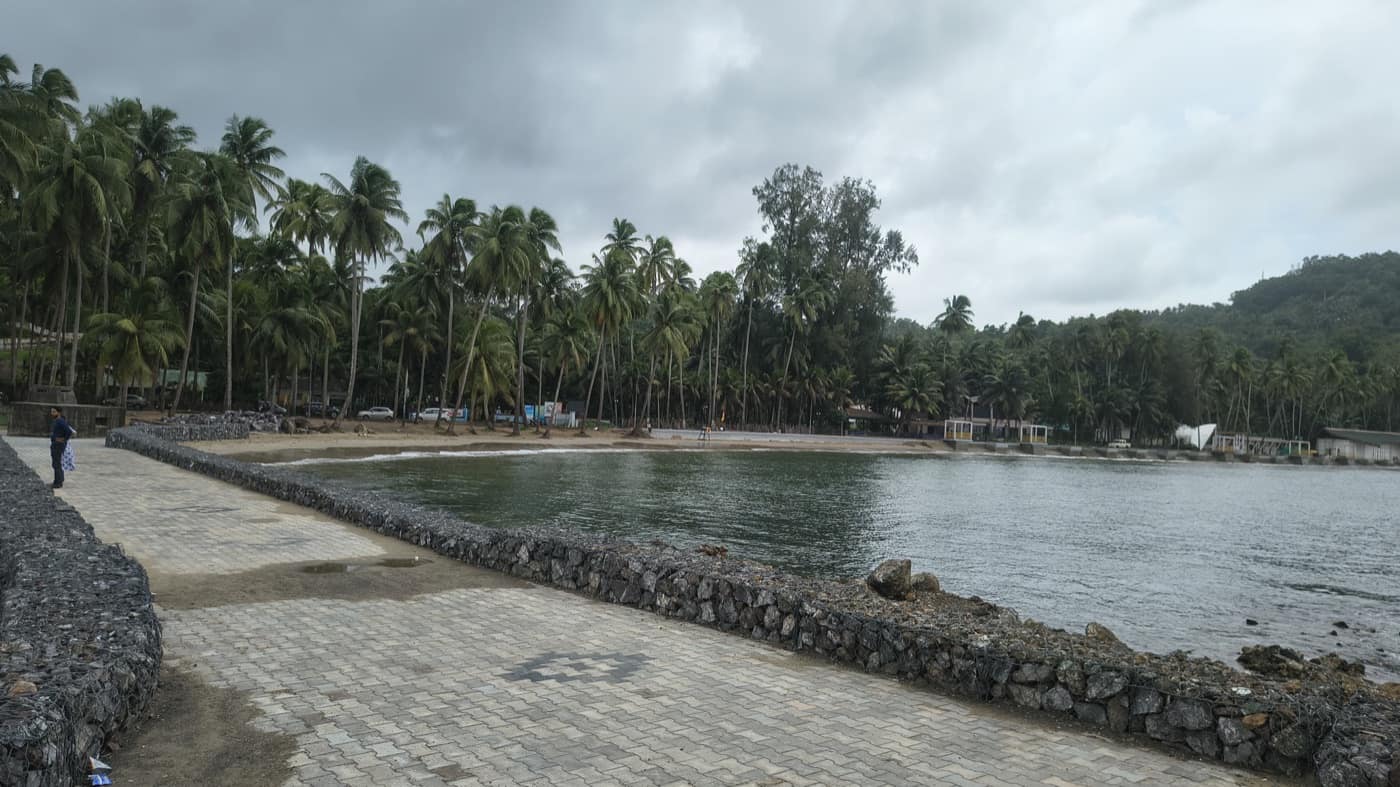
When a crossing does get cancelled, this is the job: rework the day, hold the itinerary together, and get the refund moving. Guests have described it better than we can —
“The tour guide Rohit did a fabulous job coordinating the trip despite the ferries being cancelled by the operator, alternate arrangement was done on time to keep the trip on track.”
— Arjun, August 2019, 5★ Google review
And sometimes the honest answer is to change the plan before the trip starts. In October 2023, with rain wrecking the road north, we advised a family travelling with a 2½-year-old to drop Diglipur altogether and rebuilt their itinerary three days before departure. They kept their holiday; we lost a booking segment. That trade is the point.
Turn the weather into a plan
Asked constantly, answered straight
What is the temperature in the Andaman and Nicobar Islands?
Between about 23°C and 32°C, all year round. Night lows sit around 23–25°C and day highs around 29–32°C depending on the month, and the sea holds 27–29°C in every season. April and May are the warmest months (highs near 32°C); January is the coolest at night (lows near 23°C). There is no cold season and no month where temperature alone should decide your dates — what actually changes month to month is rain and sea state.
Which is the hottest month in the Andamans?
April and May, with day highs around 32°C. It is the humidity rather than the number that people feel — afternoons in April are sticky, and this is when guests are gladdest of a morning-swim, rest-in-the-afternoon rhythm. It is still a perfectly good time to travel; you simply plan the day around the heat instead of through it.
What is the sea temperature in the Andamans?
27–29°C year-round — bath-warm by most visitors' standards, and one of the reasons the snorkelling and diving here are so comfortable. You will not need a wetsuit for warmth in any month, including December and January. What varies is not the water temperature but the visibility, which is best when the sea is calm from roughly November through April.
Is it always raining in Andaman in June and July?
No — and this is the thing guests get wrong most often. The islands don't sit under a week-long monsoon curtain; they get sudden tropical thunderstorms that pass. The real cost of a storm is a cancelled or uncomfortable ferry crossing and murky water for snorkelling or diving — not a washed-out holiday. In our experience, May to August brings roughly 5–6 genuinely disruptive weather days in a season.
What is Andaman weather like in October?
October is a value month with a trade-off: the sea is calming and rooms and airfares are easier than in peak season, but showers are still common — the Port Blair gauge averages about 13 dry days in every 30. Day temperatures sit around 24–30°C. For ferry timings and what runs in October, see the Andaman in October guide on our sister site BookYourFerry.
Is December a good month to visit?
The weather is excellent — calm seas, 25–30°C, and about 21 dry days in every 30 according to the Port Blair gauge, the driest of the October–December months (January to April are drier still, at 26–28). It is also the most expensive month on the islands: many popular hotels apply a peak-season surcharge from December 15 to January 15, and flights price accordingly. What that premium buys is a real but modest weather gain — November averages around 16 dry days with calm seas and no surcharge, and October about 13 for less again. So the honest verdict is not that December's weather is overrated, it is that December's price is. The crowd numbers, the surcharge window and when to book are on our Andaman in December page.
Can my return ferry from Havelock or Neil get disrupted before my flight?
This is the question we hear most on WhatsApp, and it's the right one to ask. Yes — rough weather can delay or cancel crossings back to Port Blair. Our example itineraries keep a final Port Blair overnight before flying out. This is an overnight gap, not a full extra buffer day or protection against every disruption. Discuss any additional time your onward connection needs.
Does everything shut down in the monsoon?
No — and less closes than people fear. Ferries sail on most days, hotels and sightseeing operate normally, Elephant Beach stays open, and the islands are at their greenest. What does change is the water: water sports run limited rather than full through the monsoon, and boat activities are the first thing a rough morning takes out. Separately, and not a weather matter at all, Jolly Buoy and Red Skin work on a rotation — each is open around six months of the year — so which of the two you can visit depends on when you come. What changes most is predictability, which is why monsoon itineraries need slack built in.
What about cyclones?
Direct hits are rare, and the season is not the one most people expect. Across 35 years of NOAA best-track records, not a single tropical cyclone has passed within 300 km of Port Blair during June to September — June to September is the wettest part of the year and the only cyclone-free stretch. The systems come in October, November and December, with a smaller peak in April and May; November is the busiest month of all. What matters in practice is that the disruption radius is much wider than the damage radius: a storm 200 km away can leave Port Blair untouched and still stop the ferries. When a system is tracking near the islands we contact affected guests, rework the itinerary around the sea state, and rebook crossings — that's the practical protection of booking with an operator based in Port Blair. Our cyclone-season data page has the full month-by-month record.
How this page stays true
Written by the Tropical Andamans editorial team from operator field notes · reviewed for weather and ferry accuracy by our Port Blair operations team · last checked 25 September 2026. Seasonal figures (surcharge windows, disruption-day counts) come from our own operating records and are rechecked before every season — pre-monsoon (May) and pre-peak (September). The links to our best-season guide were added on 4 October 2026.
Tell us your dates.
We'll tell you what the sea is doing that month, what it costs, and whether we'd travel then ourselves — before you book anything.
Only need ferries?
5% off your Andaman ferries
Booking the trip yourself? Book Makruzz, Nautika, Green Ocean and ITT Majestic on BookYourFerry.com, our founders' ferry-booking platform, with a special discount for Tropical Andamans readers.
- 5% off the fare, taken off at checkout
- All four private ferries in one search
- Tickets sent by the BookYourFerry office within 30 minutes, 8 am to 8 pm